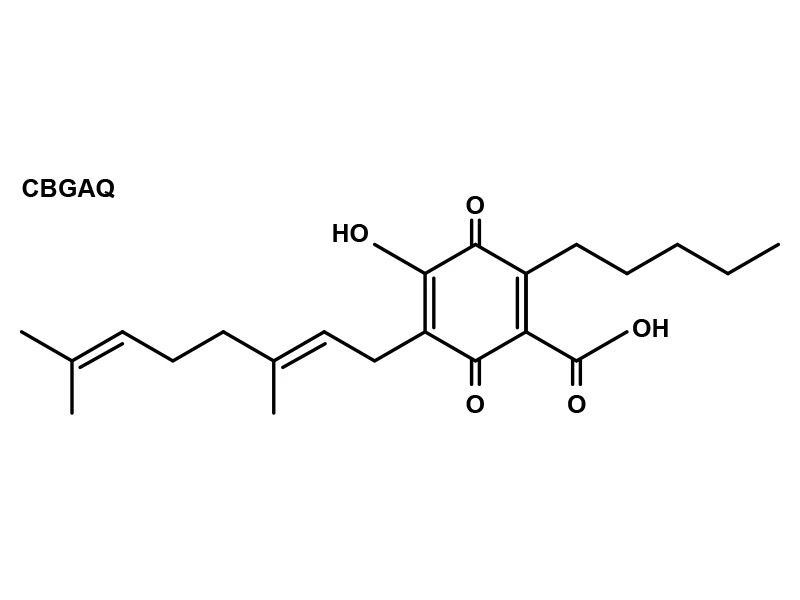
CBGAQ (CAS 2442482-70-2) is a key synthetic intermediate featuring a reactive diene core and a carboxylic acid functional group. It is primarily used in the synthesis of complex organic molecules, including cannabinoid precursors and other bioactive compounds.Cannabigerolic Acid Quinone (CBGAQ) is a unique, oxidized derivative of Cannabigerolic acid (CBGA), the central biosynthetic precursor to all major phytocannabinoids (like THCA, CBDA, CBCA). Structurally, CBGAQ is characterized by the conversion of the resorcinol (1,3-dihydroxybenzene) ring in CBGA into a para-quinone (2,5-dihydroxy-1,4-benzoquinone) moiety. This quinoid transformation significantly alters its chemical reactivity, redox potential, and biological activity, placing it in the emerging class of quinone cannabinoids.
Name :
CBGAQCAS No. :
2442482-70-2MF :
C22H30O5MW :
374.47Purity :
95%Appearance :
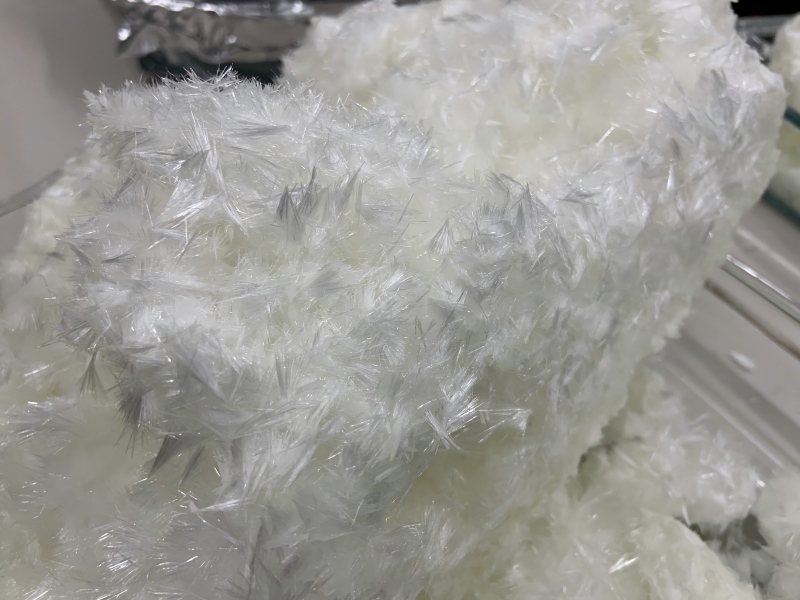
Crystalline solidBasic Information
CAS Number: 2442482-70-2
IUPAC/Chemical Name:(E)-5-(3,7-dimethylocta-2,6-dien-1-yl)-4-hydroxy-3,6-dioxo-2-pentylcyclohexa-1,4-diene-1-carboxylic acid
Synonym:CBGAQ; Cannabigerol Quinone Acid
Molecular Formula: C22H30O5
Molecular Weight: 374.47g/mol
InChi Key:KSYQQQQXRBKCCS-NTCAYCPXSA-N
InChi Code:InChI=1S/C22H30O5/c1-5-6-7-11-16-18(22(26)27)19(23)17(21(25)20(16)24)13-12-15(4)10-8-9-14(2)3/h9,12,25H,5-8,10-11,13H2,1-4H3,(H,26,27)/b15-12+
SMILES Code:OC1=C(C(C(C(O)=O)=C(C1=O)CCCCC)=O)C/C=C(CC/C=C(C)\C)\C
Physical and Chemical Properties
Boiling point: 525.9 ± 50.0 °C (Predicted)
Density: 1.132 ± 0.06 g/cm³ (Predicted)
Solubility:
DMF: 20.0 (maximum concentration mg/mL); 53.0 (maximum concentration mM)
DMSO: 25.0 (maximum concentration mg/mL); 66.0 (maximum concentration mM)
Ethanol: 30.0 (maximum concentration mg/mL); 80.0 (maximum concentration mM)
Ethanol: PBS (pH 7.2) (1:2): 0.3 (maximum concentration mg/mL); 0.8 (maximum concentration mM)
Appearance: Crystalline solid
Acidity coefficient (pKa): 0.81 ± 0.20 (Predicted)
Biological Activities
--------------占位---------------
Research on CBGAQ's specific pharmacology is in its early stages, but its quinone structure suggests distinct mechanisms of action separate from classical cannabinoids.
Redox Activity & Potential Toxicity: As a quinone, CBGAQ can undergo redox cycling within cells, potentially generating reactive oxygen species (ROS) and causing oxidative stress. This is a common mechanism for the cytotoxicity of many quinones. Its activity is therefore more analogous to compounds like THC-quinone than to CBGA.
Cannabinoid Receptor Interaction: It is expected to have negligible to low affinity for the canonical cannabinoid receptors CB1 and CB2, as the quinone modification disrupts the key phenolic interactions required for binding.
Enzyme Inhibition: Quinones are potent electrophiles that can form covalent adducts with nucleophilic thiol groups (e.g., in cysteine residues of proteins and enzymes). CBGAQ may act as an alkylating agent, inhibiting enzymes like glutathione S-transferase or other cellular targets, which could underpin both potential therapeutic and toxic effects.
Research Context: Its biological activity is of interest primarily in the contexts of cannabis chemistry stability, potential biomarker for oxidation, and as a novel chemotype for investigating non-cannabinoid receptor-mediated effects.
Biosynthesis
CBGAQ is not a product of the standard enzymatic biosynthesis in the fresh cannabis plant.
Primary Formation Pathway: Post-harvest / Non-enzymatic Oxidation. It is formed predominantly through the autoxidation of CBGA. This process is accelerated by exposure to:
1.Oxygen (Air)
2.Light (especially UV)
3.Heat
4.Extended Storage Time
Mechanism: The oxidation proceeds via radical or electron-transfer mechanisms, converting the resorcinol ring of CBGA to the corresponding para-quinone structure. Similar pathways produce THC-quinone from Δ⁹-THC and CBN-quinone from CBN.
Applications




FAQs
Q1: Is CBGAQ naturally occurring in fresh cannabis?
A: No. It is primarily an oxidation artifact or degradation product. It forms post-harvest from CBGA during drying, processing, and storage. Fresh, properly cured plant material contains negligible amounts.
Q2: Does CBGAQ have psychoactive effects like THC?
A: No. The quinone structure fundamentally alters its pharmacology. It is not expected to activate CB1 receptors in the brain and is therefore non-psychoactive. Its effects, if any, would be mediated through different biochemical pathways.
Q3: How does CBGAQ differ from CBGA?
A: The core difference is the aromatic ring structure: CBGA has a resorcinol ring (good antioxidant, precursor to other cannabinoids), while CBGAQ has a para-quinone ring (redox-active, electrophilic, degradation product). This leads to major differences in chemical stability, reactivity, and biological activity.
Q4: Is it safe? Should consumers be concerned about it in products?
A: The toxicological profile of CBGAQ in humans is not yet established. As a quinone, it has the potentialfor cytotoxicity through mechanisms like oxidative stress. Its presence is a strong indicator of product age and oxidation. The industry best practice is to minimize the formation of such oxidation products through proper cold storage, use of inert atmospheres, and protection from light. Consumers should prioritize fresh, well-stored products.
Q5: Can CBGAQ be purchased as a reference standard?
A: Yes. Due to its importance in analytical testing, it is available as a high-purity certified reference material (CRM) from specialized suppliers of cannabinoid standards, such as Cayman Chemical, Cerilliant, and Sigma-Aldrich. It is typically sold in small, concentrated amounts (e.g., 1 mg/mL in solution) for use in LC-MS calibration.
Q6: Why is monitoring CBGAQ important for the cannabis industry?
A: It is a key quality and stability marker. High levels of CBGAQ indicate that the product has undergone significant oxidative degradation, which can alter the intended cannabinoid profile, potentially reduce potency (of parent cannabinoids), and introduce compounds with unknown safety profiles. It is critical for establishing shelf-life and ensuring product consistency.
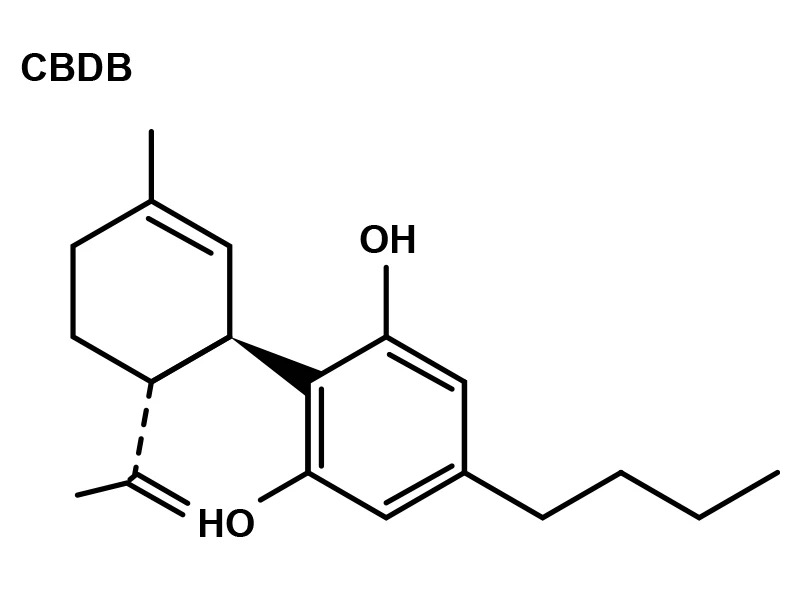
CBDB(CAS 60113-11-3)is an analytical reference standard categorized as a phytocannabinoid. CBDB has been found in strains of Cannabis and hemp. CBDB is considered an impurity in commercial extractions of cannabidiol (CBD) from hemp. This product is intended for research and forensic applications.
Details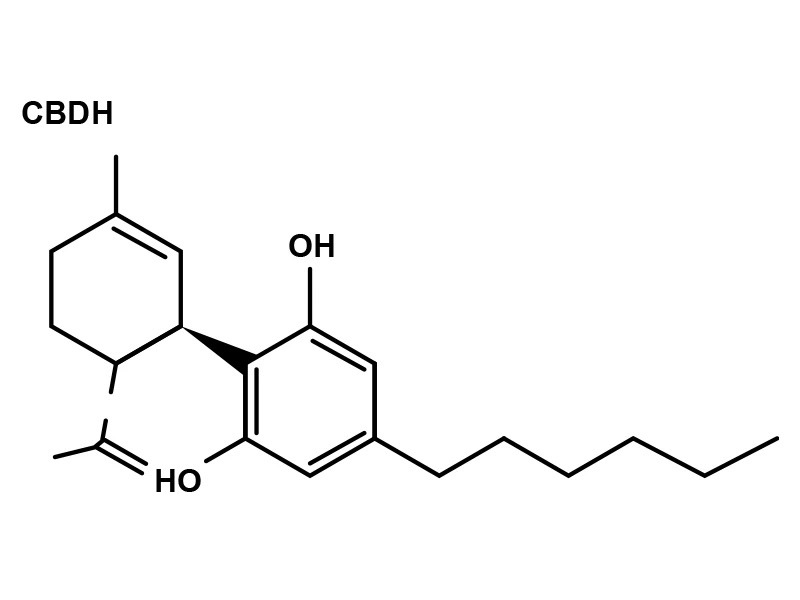
Cannabidihexol (CAS 2552798-21-5) is a novel phytocannabinoid derivative with promising analgesic and neuroprotective properties. While its pharmacological profile is promising, further research is needed to validate its therapeutic potential and optimize its pharmacokinetics.
Details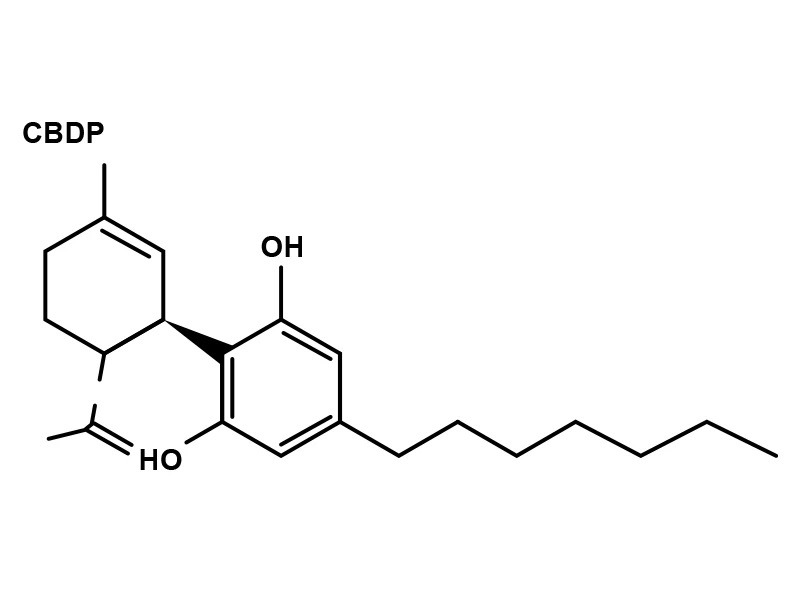
Cannabidiphorol (CAS 55824-13-0) is a novel phytocannabinoid derivative with promising analgesic and neuroprotective properties. Its high lipophilicity and structural complexity present challenges in drug development but also offer opportunities for targeted therapeutic applications.
Details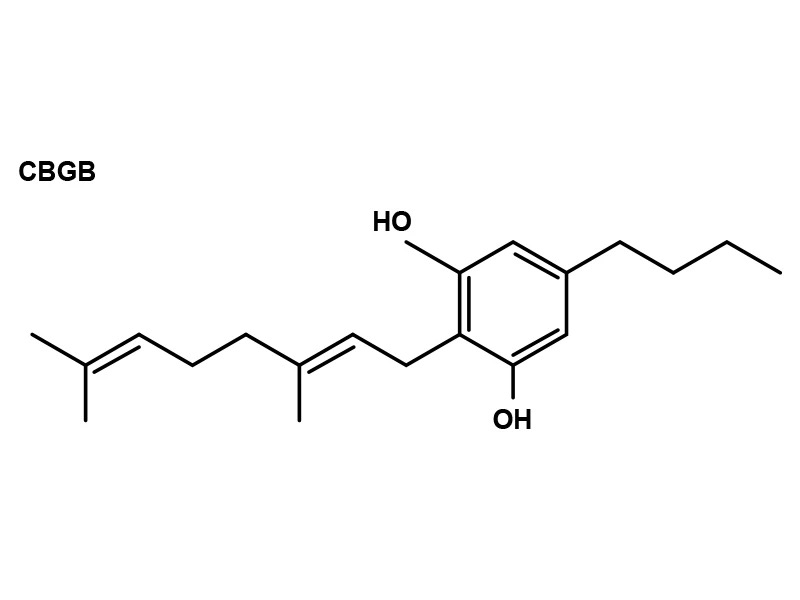
CBGB (CAS 2468125-69-9) represents a novel organic compound with potential applications in pharmaceuticals or materials science. Its structural complexity and lack of explicit data highlight the need for further experimental characterization and regulatory review.
Details
CBGAQ (CAS 2442482-70-2) is a key synthetic intermediate featuring a reactive diene core and a carboxylic acid functional group. It is primarily used in the synthesis of complex organic molecules, including cannabinoid precursors and other bioactive compounds.Cannabigerolic Acid Quinone (CBGAQ) is a unique, oxidized derivative of Cannabigerolic acid (CBGA), the central biosynthetic precursor to all major phytocannabinoids (like THCA, CBDA, CBCA). Structurally, CBGAQ is characterized by the conversion of the resorcinol (1,3-dihydroxybenzene) ring in CBGA into a para-quinone (2,5-dihydroxy-1,4-benzoquinone) moiety. This quinoid transformation significantly alters its chemical reactivity, redox potential, and biological activity, placing it in the emerging class of quinone cannabinoids.
Details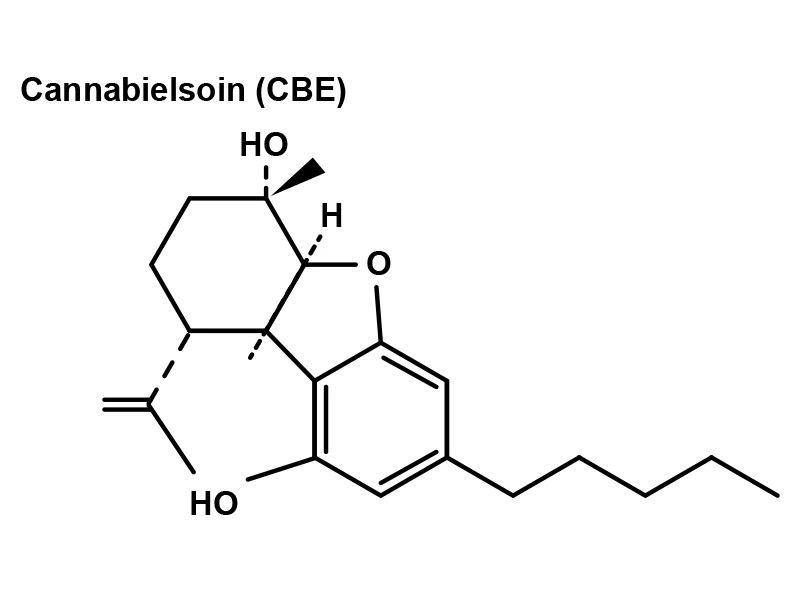
Cannabielsoin(CBE) (CAS 52025-76-0) is a phytocannabinoid derivative with potential analgesic and neuroprotective applications. Its structural complexity and lipophilicity present challenges in drug development but also offer opportunities for targeted therapeutic formulations.
Details
 Contact Us
 1st Floor, No. 477, Huancheng West Road, Nanqiao Town, Fengxian District, Shanghai,China
 sales@qxscientific.com
 +86 -13701740203


 IPv6 Network Supported |
Sitemap |
XML |
Blog |
Privacy Policy
IPv6 Network Supported |
Sitemap |
XML |
Blog |
Privacy Policy
Leave A Message
Scan to Wechat/Whatsapp :



 English
 English
 Español
 Português