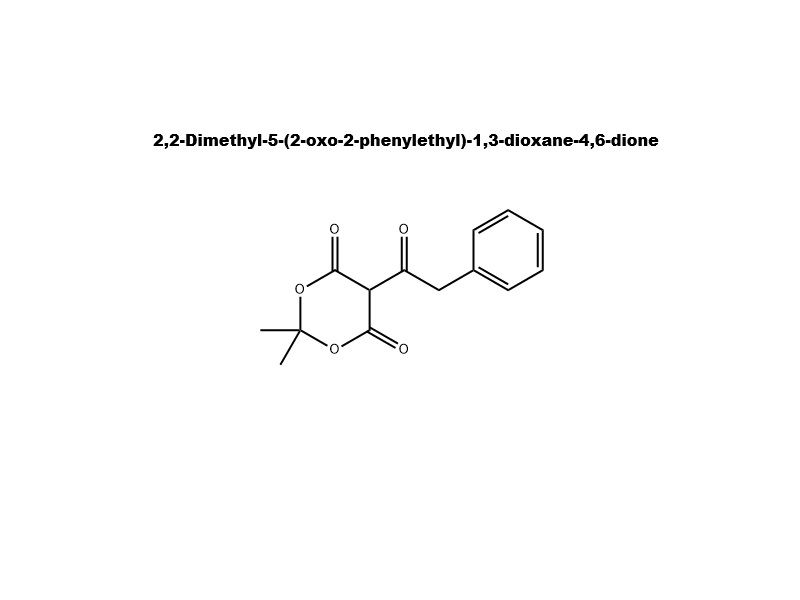
2,2-Dimethyl-5-(2-oxo-2-phenylethyl)-1,3-dioxane-4,6-dione CAS 74965-87-0 is a specialized heterocyclic organic compound. Its structure features a 1,3-dioxane-4,6-dione core (a Meldrum's acid derivative) that is substituted at the 2-position with two methyl groups and at the 5-position with a 2-oxo-2-phenylethyl (phenacyl) group. This makes it a versatile, reactive scaffold in synthetic organic chemistry, particularly for constructing more complex molecules.
Name :
2,2-Dimethyl-5-(2-oxo-2-phenylethyl)-1,3-dioxane-4,6-dioneCAS No. :
74965-87-0MF :
C₁₄H₁₄O₅MW :
262.26Purity :
97%Appearance :
a white to off-white crystalline solidStorage Condition :
Store in a sealed container under an inert atmosphere (argon/nitrogen) at 2-8°C.Chemical Properties
CAS Number: 74965-87-0
Molecular Formula: C₁₄H₁₄O₅
Molecular Weight: 262.26 g/mol
Structural Formula: The molecule consists of a 1,3-dioxane ring where positions 4 and 6 are carbonyl carbons (a cyclic diacylal of malonic acid), creating a highly reactive "active methylene" center at C5. The phenacyl side chain is attached to this reactive center.
IUPAC Name: 2,2-Dimethyl-5-(2-oxo-2-phenylethyl)-1,3-dioxane-4,6-dione
Synonyms:
5-Phenacyl-2,2-dimethyl-1,3-dioxane-4,6-dione
Phenacyl Meldrum's acid derivative
2,2-Dimethyl-5-phenacyl-1,3-dioxane-4,6-dione
Physical State: Typically a white to off-white crystalline solid.
Melting Point: Data specific to this compound is limited in public literature, but analogous Meldrum's acid derivatives often melt in the range of 100-150°C, depending on purity.
Solubility: Soluble in common organic solvents such as dichloromethane, chloroform, ethyl acetate, acetone, dimethylformamide (DMF), and dimethyl sulfoxide (DMSO). Sparingly soluble or insoluble in water and non-polar alkanes.
Stability: The 1,3-dioxane-4,6-dione ring is hydrolytically sensitive, especially under basic and acidic conditions, which can lead to ring-opening. It is also thermally labile and may undergo decarboxylation upon heating. Should be stored under anhydrous conditions, preferably in a cool, dry, and inert atmosphere.
Reactivity: The hallmark of Meldrum's acid derivatives is the high acidity of the proton at the 5-position (between two carbonyls) and the ring strain, making it a potent carbon nucleophile for alkylations and Michael additions. The ring can also act as a "malonyl equivalent" that readily undergoes ring-opening with nucleophiles or decarboxylative transformations.
Biological Activities
Direct Activity: Primarily valued as a synthetic intermediate; there is no widely reported direct pharmacological or significant biological activity for this specific compound.
Biological Relevance of Derivatives: As a key building block, it is used to synthesize compounds with potential or established biological activities. These include:
Heterocyclic Compounds: Serves as a precursor for pyridines, pyrimidines, coumarins, and other fused ring systems found in many drugs.
Functionalized Intermediates: The reactive phenacyl and active methylene groups allow access to complex structures that could be developed into enzyme inhibitors or receptor ligands.
Toxicity: Specific toxicological data is limited. As with many reactive organic intermediates, standard laboratory precautions should be observed to avoid inhalation, ingestion, or skin/eye contact.
Biosynthesis
Natural Occurrence: This is a fully synthetic compound and is not known to be produced by any biological system.
Laboratory/Industrial Synthesis: It is synthesized chemically via the acylation of Meldrum's acid.
The starting material, 2,2-dimethyl-1,3-dioxane-4,6-dione (Meldrum's acid), is deprotonated with a mild base (e.g., triethylamine, pyridine).
The resulting enolate undergoes nucleophilic attack on phenacyl bromide (2-bromoacetophenone) in an SN2-type alkylation reaction.
The product is isolated via standard workup and purification (e.g., filtration, recrystallization).
Applications



Key Advantages & Benefits
1. In Situ Generation of Reactive Ketenes Under Mild, Neutral Conditions
Benefit: Upon gentle heating, it undergoes a clean, concerted thermal decarboxylation-elimination, releasing acetone, carbon dioxide, and the reactive phenylacetylketene. This provides direct access to a ketene intermediate without requiring acid chlorides, strong bases (like triethylamine), or special anhydrous gas handling.
Application Scenario: A medicinal chemist needs to synthesize a library of β-lactams (a core structure in antibiotics) via a [2+2] cycloaddition. By heating this compound with a set of imines in dry toluene, the ketene is generated in situand reacts immediately, providing a one-pot, high-yielding route to diverse β-lactam scaffolds without the hazards of handling gaseous ketene or sensitive ketene precursors.
2. Superior Atom Economy and Synthetic Efficiency in Cyclocondensations
Benefit: The reaction byproducts (CO₂ and acetone) are volatile gases, leading to irreversible product formation and exceptionally simple purification. This "self-purifying" feature is ideal for constructing complex heterocycles in a single step from readily available nucleophiles.
Application Scenario: In the synthesis of a novel pyrazolone-based fungicide candidate, a researcher reacts this compound with phenylhydrazine. The thermal reaction generates the ketene, which is trapped by the hydrazine, followed by cyclodehydration. The only workup needed is filtration or a simple aqueous wash to obtain the pure pyrazolone, dramatically streamlining the synthetic sequence.
3. Dual Reactivity as a C-C and C-X Bond-Forming Synthon
Benefit: It acts as a bifunctional building block. The acidic methylene protons can be deprotonated for alkylation (C-C bond formation), while the entire molecule can serve as a ketene source for amidation or esterification (C-N/C-O bond formation). This allows for diverse disconnections in retrosynthetic analysis.
Application Scenario: A chemist developing peptidomimetics first deprotonates the compound with NaH and alkylates it with a bromoester to extend the chain. Subsequently, heating the alkylated product with a protected amino alcohol generates a β-amino ester derivative, creating a complex, multifunctional building block for drug discovery in two efficient steps.
4. Enables Scaffold Diversification in Medicinal Chemistry
Benefit: Serves as a versatile core for generating diverse "privileged scaffolds" central to pharmaceutical activity. The phenylacetylketene it generates is a perfect dipolarophile and electrophile for constructing pharmacologically important cores like pyrazoles, isoxazoles, and pyrimidines.
Application Scenario: In a high-throughput discovery program for kinase inhibitors, this compound is used in parallel synthesis. Reacting it with dozens of different 1,3-binucleophiles (e.g., amidines, hydrazines, hydroxylamines) in a 96-well plate under uniform thermal conditions rapidly produces a targeted library of heterocyclic cores for initial biological screening.
2,2-Dimethyl-5-(2-phenylacetyl)-1,3-dioxane-4,6-dione (CAS 74965-87-0) is a sophisticated, purpose-built reagent for advanced synthetic methodology. Its value lies in its ability to tame the high reactivity of ketenes by offering them in a stable, crystalline, and user-friendly form. For synthetic chemists, it represents a powerful strategic tool that converts a traditionally difficult and hazardous reaction (ketene formation and trapping) into a simple, reliable, and high-yielding thermal process. Its superiority is evident in applications demanding efficiency, atom economy, and rapid scaffold diversification—particularly in medicinal chemistry and heterocycle synthesis—where its unique thermal decarboxylation mechanism provides a cleaner, more elegant solution compared to classical approaches involving acid chlorides or complex multi-step sequences.
FAQs
Q1: What is the main purpose of this compound?
A1: It is primarily used as a highly reactive, bifunctional building block in advanced organic synthesis, especially for constructing complex cyclic and heterocyclic frameworks relevant to pharmaceutical and materials research.
Q2: How should it be stored to ensure stability?
A2: Store in a tightly sealed container under an inert atmosphere (argon or nitrogen) in a freezer (e.g., -20°C) to minimize hydrolysis and thermal degradation. Desiccants are recommended to exclude moisture.
Q3: What are the main hazards associated with handling?
A3: While a full hazard assessment requires consulting the specific SDS, compounds of this class can be irritants to skin, eyes, and the respiratory system. The fine powder may form combustible dust clouds. Standard PPE (gloves, safety glasses, lab coat) and handling in a fume hood are essential.
Q4: Can it be used in aqueous or mild reaction conditions?
A4: It is generally not compatible with protic or aqueous conditions due to the hydrolytic sensitivity of the dioxanedione ring. Reactions are typically performed in anhydrous organic solvents under inert atmospheres.
Q5: What is a key reaction characteristic I should know about?
A5: A defining feature is its thermal lability. Upon heating, it readily undergoes a retro-Diels-Alder-type fragmentation, losing acetone and carbon dioxide. This can be a disadvantage for high-temperature reactions but is strategically used in decarboxylative coupling methodologies.
Q6: Is it available from major chemical suppliers?
A6: It is considered a specialty or fine chemical. It may not be listed in mainstream catalogs but is often available from suppliers focusing on advanced synthetic intermediates or can be custom synthesized on a gram-to-kilogram scale.
Q7: What analytical methods are used for quality control?
A7: Common methods include
1H- and 13C-NMR spectroscopy for structural confirmation, HPLC for purity assessment, and melting point determination. IR spectroscopy can confirm the characteristic carbonyl stretches.
Q8: What are common impurities in synthesized batches?
A8: Potential impurities include unreacted starting materials (Meldrum's acid, phenacyl bromide), hydrolysis products (malonic acid derivatives), or dialkylated by-products. Purification is typically achieved via recrystallization.
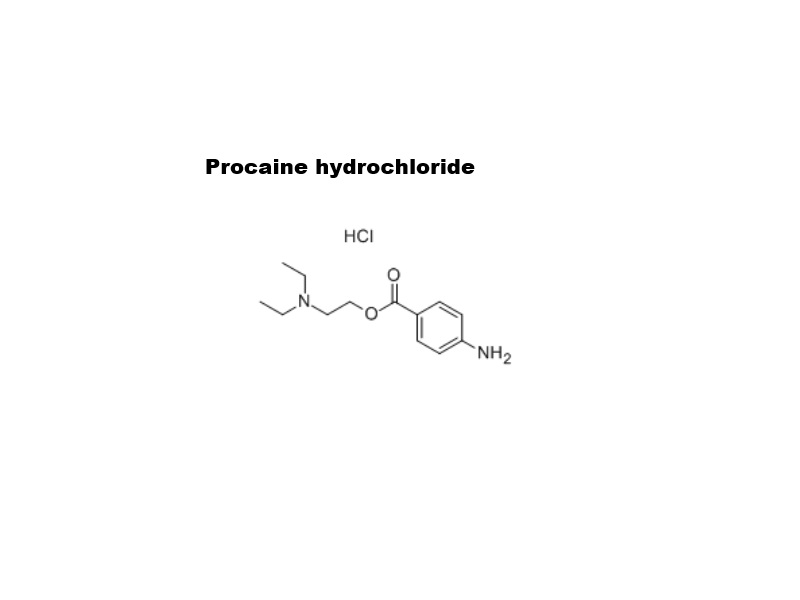
Procaine Hydrochloride CAS 51-05-8 is the water-soluble hydrochloride salt of procaine. It is the specific formulation used in clinical medicine, famously marketed under the brand name Novocain. While its use in mainstream practice has diminished, it remains a historically pivotal drug and is still employed in specific medical and therapeutic contexts.
Details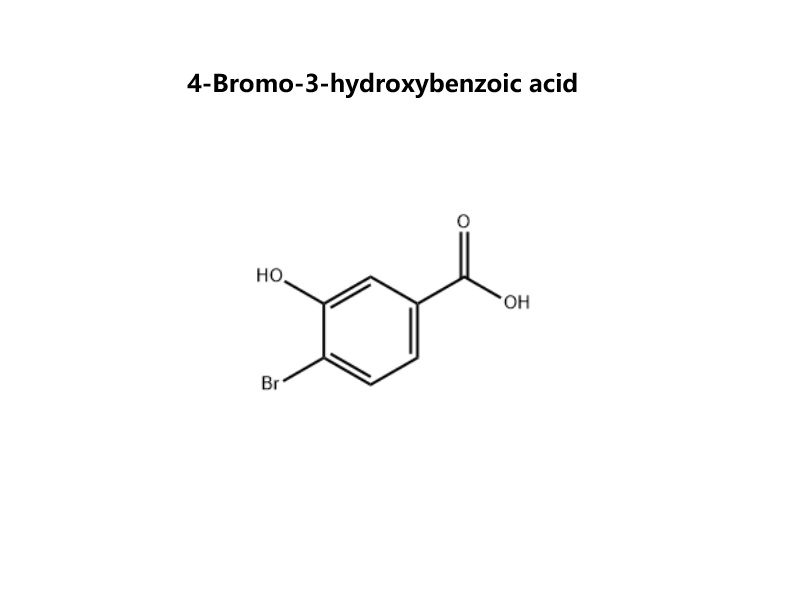
4-Bromo-3-hydroxybenzoic acid CAS 14348-38-0 is a premium, multifunctional aromatic building block engineered for complexity-driven synthesis. Its core value lies in the strategic placement of three distinct, orthogonally reactive functional groups on a benzene ring, making it an indispensable tool for convergent molecular construction in advanced research and development.
Details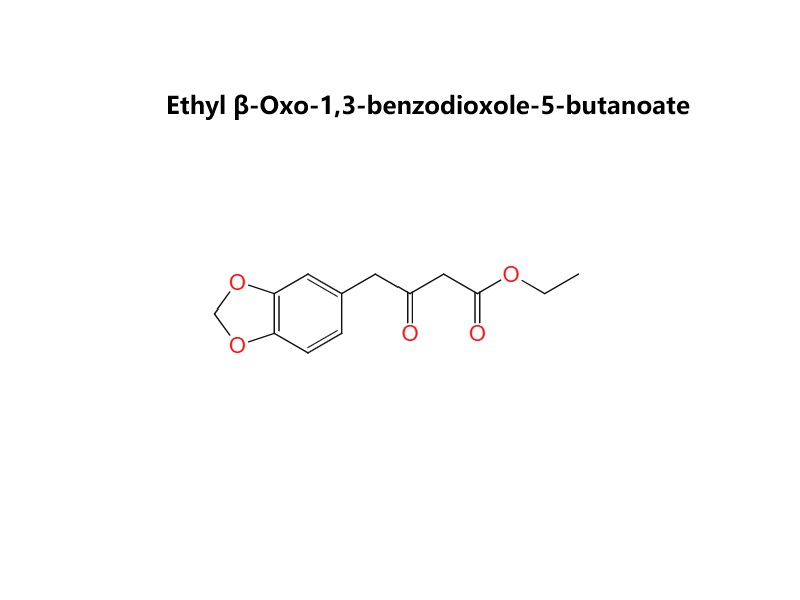
Ethyl β-Oxo-1,3-benzodioxole-5-butanoate CAS 31127-23-8 is a β-ketoester derivative featuring a 1,3-benzodioxole (methylenedioxyphenyl) aromatic system. Structurally, it consists of a benzodioxole ring attached through a three-carbon chain to an ethyl β-ketoester functional group (-CO-CH₂-COOEt). This makes it a versatile bifunctional building block for organic synthesis, combining the electronic properties of the benzodioxole group with the high reactivity of a β-ketoester.
Details![4-Nitrophenyl 3-(Benzo[d][1,3]dioxol-5-yl)-2-methylpropanoate](https://www.qixiolivetol.com/storage/uploads/images/202604/17/1776427287_qZy87IjHSQ.jpg)
4-Nitrophenyl 3-(Benzo[d][1,3]dioxol-5-yl)-2-methylpropanoate is a chirally defined, pre-activated acylating agent that combines a metabolically stable benzo[1,3]dioxole (piperonyl) pharmacophore with the exceptional reactivity of a 4-nitrophenyl ester. It enables the efficient, racemization-free introduction of a complex, chiral acid moiety under mild conditions, making it invaluable for advanced synthetic and bioconjugation chemistry. 4-Nitrophenyl 3-(Benzo[d][1,3]dioxol-5-yl)-2-methylpropanoate is a specialty ester designed as a reactive biochemical or synthetic intermediate. Its structure strategically combines three key units: (1)A 3-(benzo[1,3]dioxol-5-yl)-2-methylpropanoic acid (piperonyl-substituted, chiral acid) moiety. (2)A 4-nitrophenyl ester leaving group. This design makes it an activated ester, where the 4-nitrophenol is an excellent leaving group, facilitating efficient acyl transfer reactions under mild conditions.
Details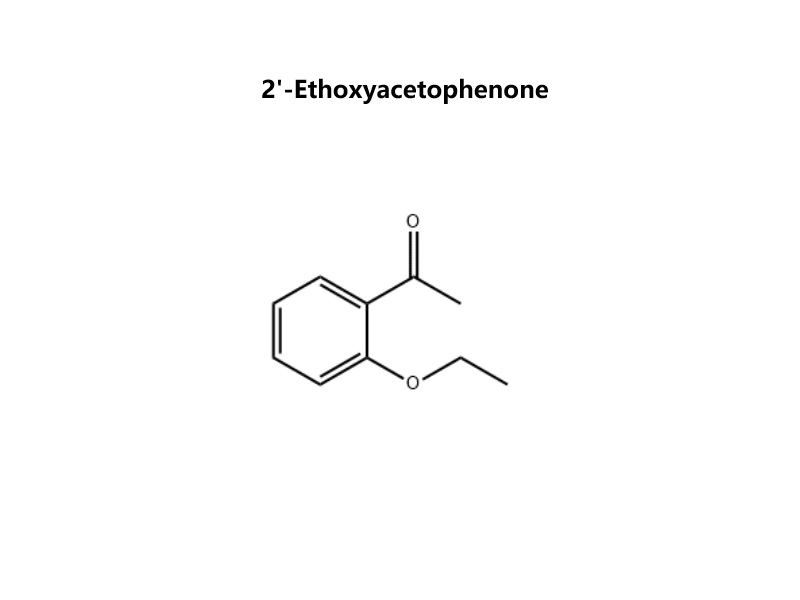
2'-Ethoxyacetophenone CAS 2142-67-8 is a specialized aromatic ketone characterized by an ethoxy substituent at the orthoposition relative to the acetyl group. This structural feature imparts distinct chemical and physical properties, making it a privileged building block for synthesizing complex molecules, particularly in the flavor/fragrance and pharmaceutical sectors.
Details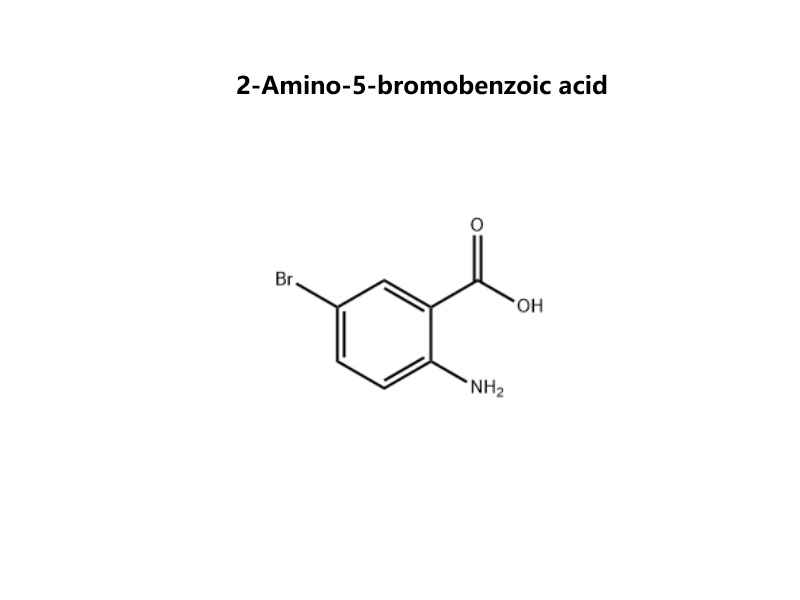
2-Amino-5-bromobenzoic acid CAS 5794-88-7 is a highly versatile aromatic building block that integrates three distinct functional groups—an amine, a carboxylic acid, and an aryl bromide—into a single, synthetically valuable scaffold. This multifunctionality makes it a crucial intermediate in pharmaceutical and advanced materials chemistry.
Details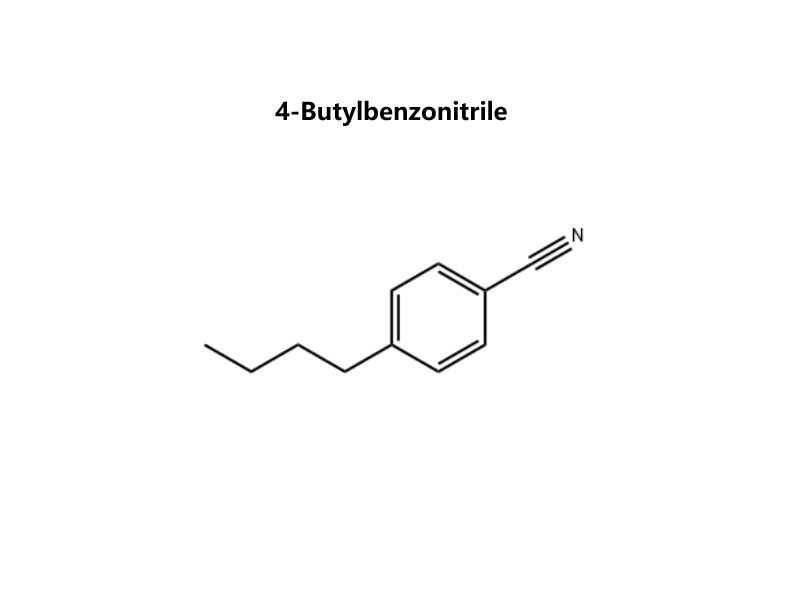
4-Butylbenzonitrile CAS 20651-73-4 is a strategically designed hydrophobic building block that combines a rigid aromatic core with a flexible linear alkyl chain and a highly versatile nitrile functional group. This triad of features makes it an exceptionally valuable intermediate for modulating physicochemical properties and enabling diverse synthetic pathways in advanced material and pharmaceutical and agrochemical research.
Details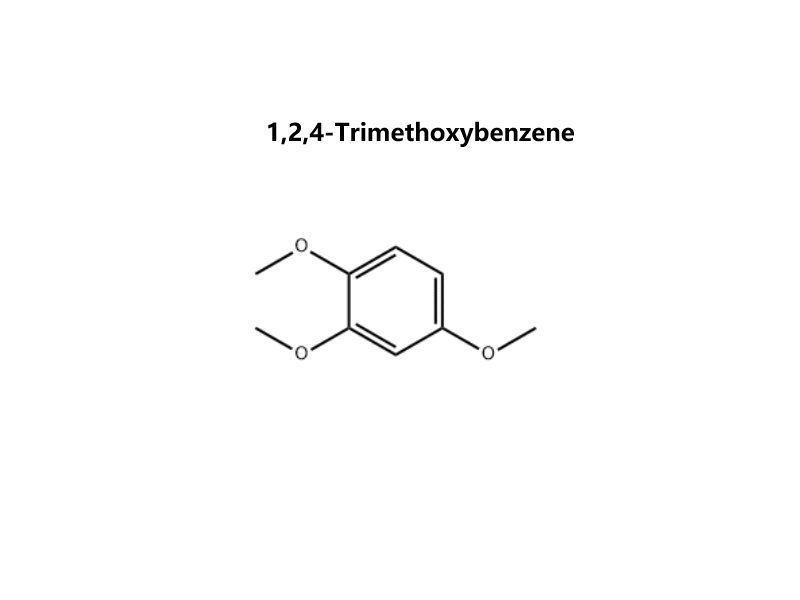
1,2,4-Trimethoxybenzene CAS 135-77-3 is a uniquely versatile, electron-rich aromatic building block. Its core value lies in its unsymmetrical yet highly predictable substitution pattern, which provides exceptional regiocontrol in synthetic chemistry. This makes it a privileged scaffold for constructing complex molecules in pharmaceuticals, agrochemicals, and advanced materials.
Details
 Contact Us
 1st Floor, No. 477, Huancheng West Road, Nanqiao Town, Fengxian District, Shanghai,China
 sales@qxscientific.com
 +86 -13701740203


 IPv6 Network Supported |
Sitemap |
XML |
Blog |
Privacy Policy
IPv6 Network Supported |
Sitemap |
XML |
Blog |
Privacy Policy
Leave A Message
Scan to Wechat/Whatsapp :



 English
 English
 Español
 Português